Thursday, 9 June 2016

Broome to Kununurra


(Magyar változat a végén)
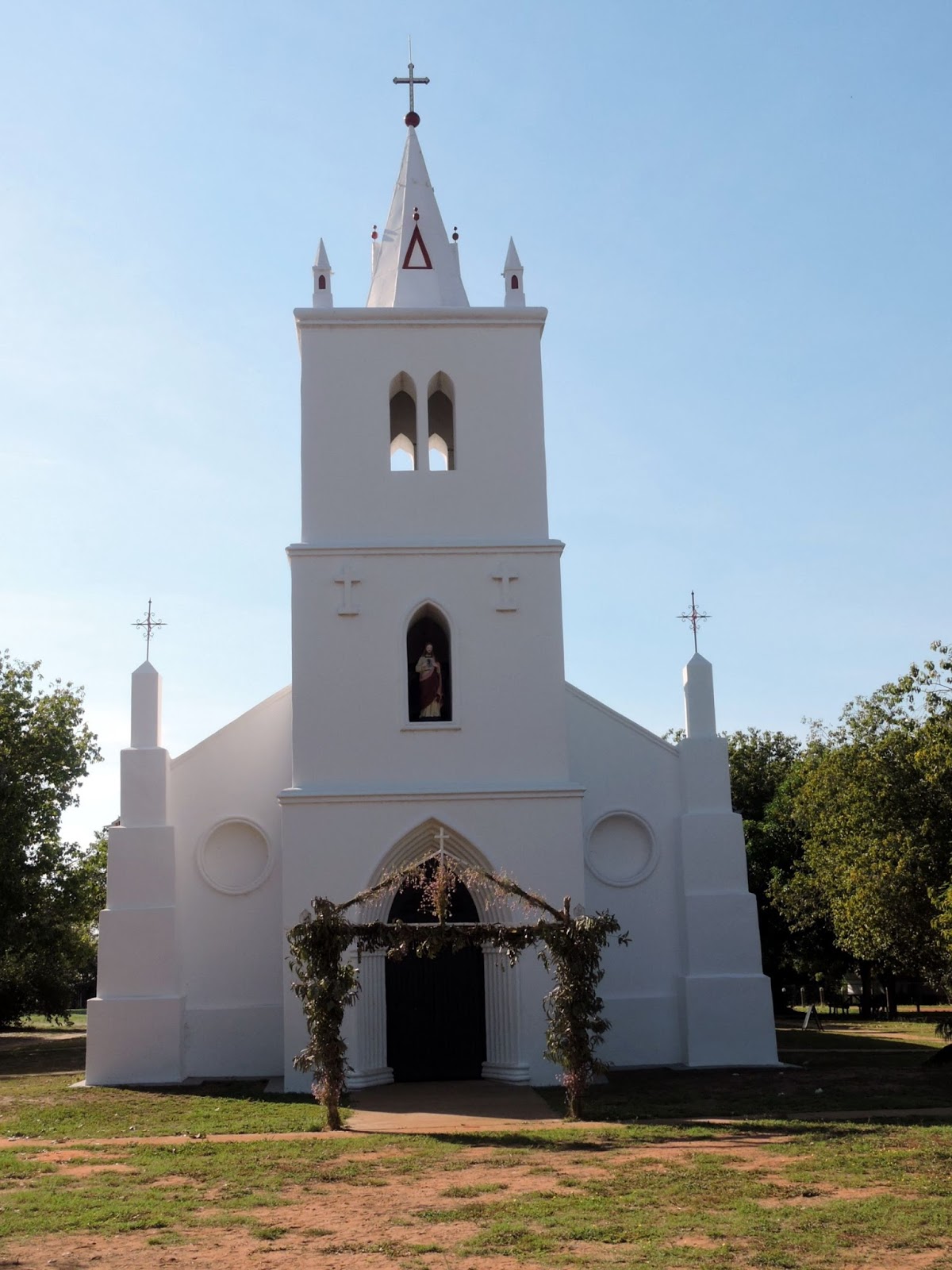

Beagle Bay church
Thursday, 2 June, we got up early, quickly had breakfast and packed up, then left  Middle Lagoon around 8 am. We got through that terrible 33 km access track without any problem. Back on the main Cape Leveque Road, we made a detour to Beagle Bay, another small indigenous village. The main reason was to buy some fuel, but there was also another interesting mission Church we wanted to see. The mission was established by Trappist Monks around 1890, it has a history of caring for stolen children. The church was opened in 1918. It is located in a wide green grassy square, and it looks very different from the one we saw in Lombadina. From the outside the building looks more like a small classical church, and inside all the decorations are made of mother of pearl shells.

Back on the main road, we had another agonising 2 hours to get through the 90 km corrugated red dirt (although I must admit, it did not feel as bad as the first time), and we were back in Broome by around lunchtime. 


The pool in the caravan park
This time we booked in to the most elegant (and, accordingly, the most expensive) caravan park, called Cable Beach Caravan park, which, as you might have guessed, is located just behind Cable Beach. Its most striking feature is a huge swimming pool, at least 30 m long, in a nicely landscaped area surrounded by lush tropical vegetation. But all the park is covered by large trees providing good shaded sites for most customers. 

Originally we booked in for 3 nights, but we had such a good time, it was hard to leave, so at the end, we stayed here for 5 nights. The first few days we had a lot of work to do, to clean up after the week-long stay in the sand and dirt, do the washing, a bit of cleaning inside the van, wash the car, etc. On Friday, I also had an emergency: one of my teeth that has been dead for a long time decided to give up and the top part of it broke off at breakfast. I went through all the dentists in town while the fourth one agreed to work on it, but it turned out to be a blessing: she was a terrific professional, she made me a new tooth within an hour that looks better than it ever did. She was also very friendly and obviously she enjoyed very much her work.
Cable Beach at high tide


Gantheaume Point
Apart from the necessary work, we enjoyed all that Broome and the caravan park had to offer: we spent some time on Cable Beach, watched the sunset most days, made a visit to the Port and to Gantheaume Point at the Southern tip of Cable Beach, with its fantastic rock formations and the replica Dinosaur footprints (the originals are only visible at very low tide). We walked around the old town centre called Chinatown (although it was mostly inhabited by Japanese and Filipinos), and on Sunday night we went to the movies, saw a new American film, Florence Foster Jenkins, with Meryl Streep and Hugh Grant. It is quite an extreme story, although based on real-life events. It was played in the historic Sun Pictures, opened in 1916, the longest operating picture gardens in the world, an open-air cinema inside a century-old wooden building.
The Sun Pictures garden in Chinatown

The weather was very hot, around 32-34 degrees during the day, and even at night it did not go below 28. What made it even more difficult to bear was the extremely and unusually high humidity, above 90% most of the time. Fortunately we could cool off a bit in the swimming pool in the caravan park several times a day. 

On Tuesday, 7 June, we bid farewell to Broome, to start our long journey back towards Sydney. Although we have more destinations and more than half the time ahead of us before we return, this was the furthermost point and the main target of our tour. On the way out we washed off the caravan as much of the dirt as we could. 


The main street in Derby
By early afternoon we came to Derby, which is only about 220 km from Broome. We had good memories of this town from 2012, we wanted to revisit its main interests. We walked out to the wharf, where one can appreciate the enormous size of the tide, one of the highest in the world (11.5 m). This time it was high tide, and the water was brown and choppy due to the strong winds. When we came back later to watch the sunset, the water was down by about 4 metres. We drove along the main street, lined with beautiful rows of majestic boab trees. 


One of the many boab trees
Kimberley landscape
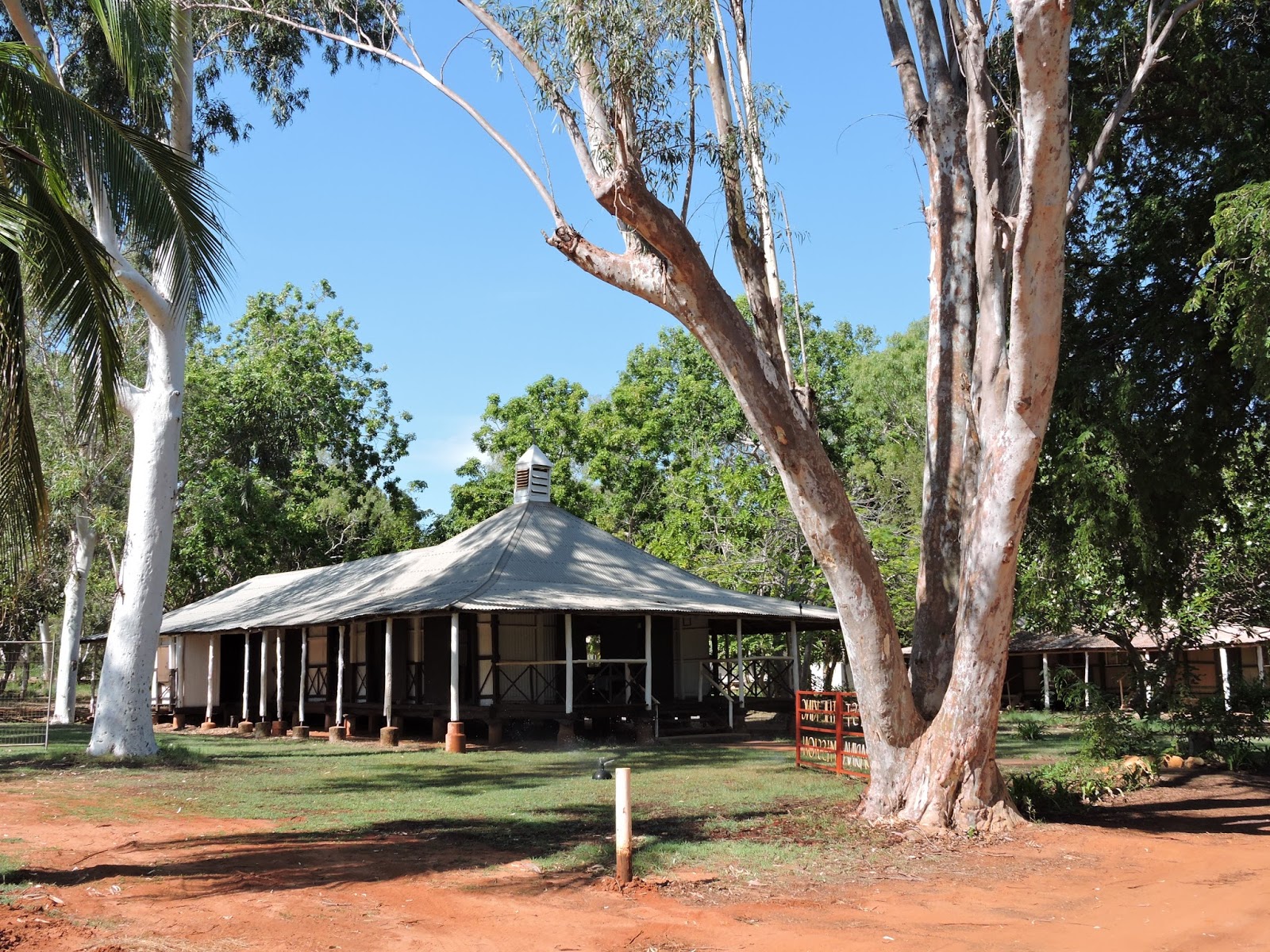
Wednesday morning we left Derby and drove all day, towards East. The highway leads around the South side of the Kimberleys, the vegetation is varied. The most attractive features are the huge boab trees and the termite mounds. It is hard to resist the temptation to take a photo of each. 


We had a lunch-break at Fitzroy Crossing, and we spent the night at the Mary Pool, a popular free campsite at the banks of the Mary river. It was indeed popular, full of caravans and campers, but there is plenty of space. The night was surprisingly chilly, around 16 degrees, a huge change after the hot and humid weather on the coast, only a few hundred kms away. In the morning we walked along the dry, sandy river bed with only a few pools of water at this time of the year. 


The Mary river in morning lights
Thursday, 9 June we continued through Halls Creek then up North along the highway. The landscape has changed, it was much drier here, no more boab trees. Then we crossed some higher ranges, and as we got closer to Kununurra, the boab trees reappeared again. We arrived to Kununurra around 4pm, and settled in a nice spot in the Kimberleyland caravan park, facing the lake. 


Another giant boab tree
----------------


A Beagle Bay templom oltára
Csütörtökön, június 2.-án korán felkeltünk, gyorsan megreggeliztünk, felpakoltunk és 8 óra tájban indultunk Middle Lagoon-ból. Simán átjutottunk a 33 km-es bekötő útszakaszon. Amint kiértünk a fő Cape Leveque útra, tettünk egy kitérőt Beagle Bay-be, egy másik kis aboriginal településbe, ami útba esett visszafelé. Tankolnunk kellett, de itt is volt egy érdekes régi missziós templom amit meg akartunk nézni. Ezt a települést Trappista barátok alapították 1890 táján, fő funkciója az "ellopott gyerekek" nevelése volt (a félvér gyerekeket erőszakkal elvették az aboriginal szülőktől, hogy "rendes" embereket neveljenek belőlük). A templom 1918-ban nyílt, egy széles zöld füves téren, nagyon más, mint amit Lombadina-ban láttunk. Az épület kívülről inkább egy kis klasszikus templomnak néz ki, belül viszont az összes dekoráció gyöngyház-kagylóból készült.


Újabb két-órás tortúra volt átjutni a 90 km-es bordázott földúton (ugyan másodszorra azért könnyebbnek tűnt), és déltájban visszaértünk Broome-ba. Ezúttal a legelegánsabb (és ennek megfelelően drága) kempingben szálltunk meg. Cable Beach Caravan Park-nak hívják, és, véletlenül, közvetlenül a Cable Beach mögött van. Az eleganciáját a hatalmas, legalább 30 m hosszú úszómedence adja, gyönyörűen rendezett, trópikus lugassal körülvéve. Az egész kemping sűrű lombos fák alatt fekszik, jó árnyékos helyet biztosít a táborozóknak.

Trópusi virág-erdő a kemping oldalán
Eredetileg 3 éjszakára foglaltunk helyet, de olyan jól éreztük magunkat, nehéz volt tovább indulni, úgyhogy végül 5 éjszakát töltöttünk itt. Az első napokban elég sok dolgunk volt, kimosakodni és tisztogatni az egyhetes homokban és porban töltött tengerparti táborozás után. Mostunk, takarítottunk a lakókocsiban, lemostuk az autót. Pénteken történt egy kis baleset is velem: reggeli közben letört egy fogam felső fele. Ez a fog már évek óta halott volt, hatalmas töméssel, most elege lett. Végigjártuk a város összes fogorvosát, mire a negyedik hajlandó volt kezelésbe venni. De ez szerencsés véletlen volt, mert kitűnő szakembernek bizonyult, és egy óra alatt új fogat épített a megmaradt csonkra, ami jobban néz ki mint az eredeti. Ráadásul egy kedves, barátságos Kiwi (új-zélandi) nő volt, aki láthatóan élvezte a munkáját.
Még egy naplemente a Cable Beach-en apálykor


A Gantheaume Point szikla-formái
A szükséges teendőkön kívül élveztük Broome és a kemping nyújtotta előnyöket, üldögéltünk és fürödtünk a Cable Beach-en, esténként megnéztük a naplementét, elmentünk a kikötőhöz és a Cable Beach déli csücskében ujra megnéztük a Gantheaume fok fantasztikus szikla-képződményeit és a dinoszaurusz-lábnyomok másolatait (az eredeti lábnyomok csak nagyon alacsony apálynál láthatók). Sétáltunk a régi központban amit Chinatown-nak hívnak (ugyan eredetileg japánok és filippino-k laktak benne). Vasárnap este moziba mentünk, egy új amerikai filmet láttunk, Florence Foster Jenkins a címe, Meryl Streep és Hugh Grant a főszereplők. Érdekes, kicsit extrém sztori, de megtörtént eseményeken alapul. A mozi volt az igazi történelmi érdekesség, a Sun Pictures egy kertmozi ami 1916-ban nyílt és azóta is egyfolytában üzemel, ezzel bekerült a Guiness World of Records-ba.

Nagyon meleg volt végig, napközben 32-34 fok körül, és éjszaka sem ment 28 alá. Ráadásul nagyon párás is volt, állandóan 90% fölött, amit nehéz volt elviselni. Szerencsére a kemping úszómedencéjében le tudtuk hűteni magunkat naponta többször is.

Kedden, június 7-én, fájó szívvel elbúcsúztunk Broome-től, és elindultunk hazafelé. Ugyan még megyünk sok helyre és még több mint a fele időnk hátravan a 3 hónapból, Broome volt a legtávolabbi pont és az utunk fő célja, innen már lassacskán közeledünk Sydney felé. Kifelé menet még a lakókocsiról is lemostunk annyi port és piszkot amennyit csak tudtunk - nem lett tökéletes, de jobb mint addig.

A Derby móló dagálykor
Koradélután értünk Derby-be, ami csak 220 km-re van Broome-tól. Szép emlékeink voltak innen 2012-ből, ezért akatunk visszajönni. Kisétáltunk a mólóra, innen lehet érzékelni a hatalmas ár-apály mozgást, ami itt az egyik legnagyobb a földön, 11.5 méter. Ezúttal dagály volt, a víz zavaros barna és hullámos az erős széltől. Később visszajöttünk a naplementét nézni, akkor már vagy 4 méterrel lejjebb volt a víz. A másik látványosság a széles főutca, amit több sor elegáns boab-fasor szegélyez.


A táborhelyünk Mary Pool-nál
Szerda reggel tovább indultunk Derby-ből és egész nap utaztunk kelet felé. A főút a Kimberleys déli oldalán halad, igen változatos tájak és domborzat között. Rengeteg hatalmas boab-fát és termesz-várat láttunk. Nehéz ellenállni hogy mindet lefényképezze az ember, olyan érdekesek és mindegyik más. Délben Fitzroy Crossing-nál álltunk meg ebédelni, az éjszakát pedig egy Mary Pool nevű népszerű szabad táborhelyen töltöttük, a Mary folyó partján. Valóban népszerű volt, regnetegen voltak, de volt hely bőven, nekünk is jutott. Az éjszaka meglepően hideg volt, 16 fok körül, nagy különbség a forró, párás levegő után alig pár száz km-el arrébb. Reggel kicsit sétáltunk a kiszáradt homokos folyómederben, ahol ebben az évszakban csak itt-ott van egy kis víz.


Még egy boab...
Csütörtökön, június 9-én folytattuk az utat Halls Creek-en keresztül észak felé. Kicsit megváltozott a táj, itt sokkal szárazabb, eltűntek a boab-fák. Aztán átkeltünk néhány magasabb hegyláncon és ahogy közeledtünk Kununurra-hoz, újra feltűntek a boab-fák. Délután 4 felé értünk Kununurra-ba, és letelepedtünk a Kimberleyland caravan parkban. Nagyon jó helyet kaptunk, közvetlenül a tó partján.


Thursday, 2 June 2016

Middle Lagoon

(Magyar változat a végén)

Middle Lagoon is a family operated fishing and holiday retreat on the Dampier Peninsula, 170 km North of Broome. It is advertised as a "tropical paradise". The inlet is surrounded by a wide beach and protected by a huge rock bar. The water is shallow and free of stingers and crocodiles, so it's a great place for swimming and snorkelling. 
Middle Lagoon

There are several types of accommodation available, some cabins, but most people come with caravans or campervans. We booked in here for a week from Broome. This was our main purpose: to spend some time right on the beach in the tropical climate. Well - we got a bit more than we bargained for...

The Cape Leveque Road
What the tourist brochures do not say is that it is almost as difficult to get in to this "paradise" as for the rich person to the biblical Paradise. One has to come up North on the Cape Leveque road for 130 km, out of which about 90kms is a terribly corrugated red sand track in a basin with a lot of water damage. Then after the turn-off towards Middle Lagoon, there is another 33 kms more soft, bumpy and narrow sand track with more corrugations and undulations and more water damage. 


The access road to Middle Lagoon
We came up last Thursday, 26 May, and it took more than 3 hours to get through. As we got to the dirt section, I lowered the tyre pressure as recommended, but was worried many times if our car and van can get through. It was a very inconvenient drive, I think if we knew it was that hard, we would not have come. But finally we got here safe and sound.

It was also not easy to find a spot for our van, as the one originally allocated to us was too small, and it took more than an hour to drive around and pick a site that was suitable and available. But finally we settled down to a nice little spot beside a group of pandanus trees about 50 m-s from the beach.
Our camp spot at Middle Lagoon
Morning on the beach
Since then we spent all week on the beach or near the van. The beach is indeed a little paradise. Clear and sandy and almost deserted. The water is around 30 degrees, clear and very salty, much saltier than the Pacific Ocean. One can float on the surface without moving, caressed by gentle waves. Each day we came down around 9 am and settled down on the beach in the shade of our beach umbrella, reading books and relaxing, and going for a plunge in the water from time to time. 

Around lunchtime we went back to the van, took a shower, had lunch, then spent the afternoon in the shade beside the van, again reading and relaxing. After sunset, which is very early here at this time of the year, around 5.30 pm, we cooked, had our dinner, then sat outside reading and/or chatting, and looking at the bright starry sky, an amazing view that one can't see in Sydney.

Evening lights
It was very hot during the day, up to 34-35 degrees, and what made it even more difficult that it was very humid, some mornings up to 95%, which was surprising. Fortunately there was always a bit of breeze that made it bearable. The evenings were very nice, cooler but still warm enough to sit outside in a short and a T-shirt.

The other thing the brochures failed to mention was the sandflies. These tiny, almost invisible creatures have a nasty bite that stings and burns for days or weeks. By the second day we were full of bites and suffered a lot, especially Kati who has an allergic reaction to such bites, each one develops into large red and painful bumps on her skin. We talked to some regulars who come here every year and they said it has never been as bad as this year. I guess it might be related to the unusually humid conditions. We suffered so much that sometimes we thought about heading back to Broome early - but we persevered...

We moved only once during the week. On Monday we went up to the top of the peninsula to see what's out there. It meant to go through again the 33-km torture of the sandy access road out and back, but it was a bit easier without the caravan. Once back on the main road, it is sealed up to the top, and the places to visit are close to the main road.

Lombadina town centre
Lombadina is a small indigenous community about 50 km further North from the Middle Lagoon turn-off. It is one of the few communities on the peninsula that welcomes visitors and offers accommodation and tours (most others are only accessible for tourists by permit). There is a small entry fee, but it is worth every cent. It is a beautifully maintained, clean and well organised place. The public buildings - school, store, health centre - are located around a large green oval square, with lots of lush tropical trees. There is a bakery, we bought a freshly baked loaf of bread - although white only -, still warm from the oven. There is a craft gallery and a proper shop for basic supplies. We saw a few local people mowing the grass on the centre lawn. Everybody works here, nobody takes government handouts. The people are good looking a friendly. The school was full of children. It is an amazing place, very surprising after what we have seen before in other (not-)similar places.
The mission church, Lombadina

Lombadina mission church
Then there is the old mission church building, an ingenious design and construction, built in 1934 by the local people, made from bush timbers and paperbark roof covered with corrugated iron sheets. The inside decoration is also made by local craftsmen, wood carving reliefs and large sea shells are used as holy water containers.

According to the tourist guide, "behind the community grounds is the most stunning beach you can imagine", but we did not feel like driving through the high sand dunes, so we missed that.

Our next stop was the Kooljaman resort at Cape Leveque, at the Northern tip of the peninsula. Another 5 km of bad sandy track leads to it. It is jointly owned by the Cape Leveque aboriginal communities, every member is a shareholder. They offer a wide range of accommodation and tours. The place is mostly famous for its white sand beaches. Again there is an entry fee, but we did not want to stay here, so just had a quick look around to take a few photos, then headed back to the main road.


The hatchery
Ardyaloon (One Arm Point), another aboriginal community of about 400 people, is located at the very end of the Cape Leveque road. Again, we had to pay an entry fee, quite high for my liking, but a note at the office tries to justify it by stating that they do not receive any government subsidies any more. This place is nothing like Lombadina, more like what we have seen elsewhere in Western Australia and the Northern Territory. Most of the town is inaccessible for tourists. The only interesting place is the aquaculture hatchery at the top end of the peninsula. Here they are breeding juvenile trochus shells and other fish and molluscs of commercial value. A local aboriginal woman led us around the tanks and explained the various species we saw. The hatchery is located at the entrance of the King Sound, a vast, almost closed bay. This place has the second highest tidal movement on the Earth, about 10-12 m between high and low tide. We had a look at the mouth of the King Sound, the tide was just moving in at an amazing speed.
The tide flowing into King Sound

Cygnet Bay 
Our last stop was at the Cygnet Bay Pearl Farm. This was the first pearl farm established in Australia in 1946 by Dean Brown and his family. It is still a fully commercial pearl farm, offering tours and accommodation, but our only interest this time was the restaurant. There is a bistro at the top floor of the building with beautiful views to the bay. We had a good meal, then a refreshing plunge in the adjacent pool, followed by coffee. After that we headed back to Middle Lagoon.

The last two days we had the same program as before: beach in the morning, resting in the shade beside the caravan in the afternoon, reading, cooking, and suffering from the sandfly bites. This is our last evening here, we already started to pack up. Tomorrow morning we plan to get up early and head back to Broome with a bit of apprehension. If you read this on our blog, you'll know that we made it!

-----

Middle Lagoon
Middle Lagoon egy családi vállalkozásban működő horgász- és üdülő-központ a Dampier félszigeten, 170 km-el északra Broome-tól. A turista ismertetőkben "trópusi paradicsom"-ként emlegetik. Az öblöt egy sziklazátony védi a nyílt tengertől, vize viszonylag sekély és védett a krokodiloktól és más szúró és mérgező tengeri állatoktól. Itt félelem nélkül lehet fürödni és búvárkodni.
Többféle szállás-lejetőséget kínálnak, de legtöbben a saját lakókocsijukkal vagy kemping-felszerelésükkel és hajójukkal jönnek. Mi még Broome-ból foglaltunk itt helyet a lakókocsinknak egy hétre. Ez volt a fő célunk: közvetlenül a tengerparton táborozni a trópusi klímában. Hát ez sikerült, csak azt nem tudtuk, hogy ez mivel jár...

Amit a turista-ismertetők nem említenek az az, hogy majdnem olayn nehéz ide eljutni, mint a gazdag embernek a bibliai paradicsomba. Broom-ból a Cape Leveque úton kell fejönni 130 km-t, amiből kb. 90 km borzasztóan bordázott vörös homokos földút egy teknőben, tele kiszáradt pocsolyákkal. Aztán a Middle Lagoon-hoz levezető út egy újabb 33 km keskeny, puha, hullámos homok-út, amit még jobban tönkretett az eső és a víz-elvezetés hiánya.
Itt is lehet szép naplementét látni

Múlt csütörtökön, május 26-án jöttünk fel, több mint 3 órát tartott az út. Ahogy elértük a homokos részt, leengedtem a kerekekben a nyomást ahogy elő van írva, de végig izgultam hogy átjutunk-e baj nélkül. Nagyon kellemetlen út volt. Azt hiszem, ha tudjuk, hogy ilyen nehéz, nem vágtunk volna neki. De végül is ideértünk minden baj nélkül.

Helyet találni sem volt könnyű, mert amit először kijelöltek nekünk az túl kicsi volt, nem fértünk bele. Vagy egy órát jártunk körbe mire sikerült egy megfelelő helyet kiválasztani. Végül egész jó helyet találtunk egy kis pandanus-facsoport mellett, kb 50 m-re a tengerparttól.

Jelek a homokban
A kezdeti nehézségek után a hét nagy részét a tengerparton és a lakókocsink mellett töltöttük. A tengerpart valóban paradicsomi, szép tiszta homok, alig néhány ember. A víz kb 30 fokos, tiszta és nagyon sós, sokkal sósabb mint a Csendes Óceán. Lehet mozdulatlanul lebegni a felszínén, ringatózni a csendes hullámokban. Minden nap reggel 9 tájban letelepedtünk a parton az ernyőnk alatt, olvastunk, nézelődtünk, fürödtünk.

Déltájban visszamentünk a lakókocsihoz, lezuhanyoztunk, megebédeltünk, és a délutánt a lakókocsi mellett az árnyékban töltöttük, olvastunk, pihentünk. Napnyugta után, ami itt nagyon korán van, fél 6 körül, megfőztük a vacsorát, ettünk, aztán még üldögéltünk kint, beszélgettünk, és néztük a csillagos eget, ami egy fantasztikus látvány ilyen helyen, messze a városi fényektől.

Napközben nagyon meleg volt, 34-35 fok és ráadásul nagyon párás, reggelenként néha 95%-ra is felment. Szerencsére legtöbbször volt egy kis enyhe szél a tenger felől, így könnyebb volt elviselni. Esténként nagyon kellemes volt az idő, kicsit lehűlt, de még elég meleg maradt hogy egy szál trikóban lehetett kint üldögélni.

A másik dolog amit a turista magazinok nem említettek, a homoki legyek (sandfly). Ezek az apró, alig észrevehető kis szárnyasok nagyon kellemetlenül csípnek, és a csípésük még napokig, sőt, hetekig égnek-fájnak. A második napra már tele voltunk csípésekkel, és azóta is sokat szenvedünk tőlük, különösen Kati, aki allergiás az ilyen csípésekre. Beszélgettünk néhány rendszeresen ide járó családdal, ők azt mondták, még soha nem volt ilyen sandfly-invázió mint idén. Valószínűleg a szokatlanul párás idő miatt lehet. Nagyon szenvedtünk tőlük, néha már fontolgattuk, hogy korábban visszamegyünk Broome-ba, de végül maradtunk...

Csak egyszer mozdultunk ki egész héten. Hétfőn felmentünk a félsziget végéig körülnézni. Ehhez persze megint át kellett menni a 33-km tortúrán hogy kijussunka főútra és aztán vissza, de a lakókocsi nélkül azért egy kicsit könnyebb volt. A főút maga az végig burkolt innen a végéig, és a helyek amiket meglátogattunk, közel vannak a főúthoz.

Lombadina volt az első, egy kis helyi közösség kb 50km-el északabbra Midlle Lagoon-tól. Ez egyike a kevés olyan aboriginal településeknek aelyiket turisták szabadon meglátogathatnak, a legtöbbet csak külön engedéllyel lehet megnézni. Belépődíjat kell fizetni, de megéri. Az egész település szépen rendben van tarva, tiszta és jól működik. A középületek - iskola, üzlet, egészségügyi központ - egy széles ovális züldterület közül helyezkednek el, trópikus fák között. Van egy pékség, vettünk friss, még meleg kenyeret, sajnos csak fehér kenyér volt, itt csak ezt szeretik. Van egy kézműves bolt, egy élelmiszer bolt alapvető cikkekkel. Láttunk néhány helybélit a központi téren dolgoztak, vágták a füvet, kertészkedtek. Állítólag itt mindenki dolgozik, senki nem él munkanélküli segélyből. A helybeliek mind jóképű, barátságos, mosolygós emberek. Az iskola tele volt helybéli gyerekekkel. Érdekes, meglepő hely volt, nagyon különböző mindattól amit korábban másfelé láttunk. De jó látni, hogy ilyen is van.
Lombadina templom

Van itt egy régi missziós templom, 1934-ben építették a helybeliek, teljesen helyi anyagokból, fa gerendákból és fakéreg fedéssel, amit később hullámbádoggal borítottak. A belső dekorációt, fa domborműveket, is helybeli kézművesek készítették. Nagy tengeri kagylókat használnak szenteltvíz tartónak.

A turista ismertető szerint, "a közösségi központ mögött fekszik a legszebb tengerpart amit el tudsz képzelni", de nem volt kedvünk keresztül autózni a magas homokdűnéken, így ezt nem láttuk.

Következő állomásunk a Kooljaman resort volt a félsziget északi csúcsán. Ide is 5 km elég rossz állapotú homokos földút vezetett. A resort (üdülőhely) a helyi aboriginal közösség tulajdonában van. minden helyi lakos részvényes. Sokféle szállást és túrákat ajánlanak. Itt is van belépődíj, de nem akartunk itt maradni, úgyhogy csak gyorsan fényképeztünk egy párat és továbbálltunk.

A hal-keltető mdencék
Ardyaloon (One Arm Point) a Cap Leveque út legvégén, egy kb. 400 fős aboriginal település. Itt is kellett belépődíjat fizetni, jóval többet, mint az előző helyeken, de egy kiírás azzal indokolta ezt, hogy ez a település nem kap semmi támogatást a kormánytól. Ez  a hely egész másképpen néz ki mint Lombadina, inkább azokra hasonlít, amiket korábban láttunk Western Australia-ban és a Northern Territory-ban. A város nagy részébe nem mehetnek be idegenek. Az egyetlen érdekesség itt a hal-keltető, ahol különféle kagylókat, halakat és más tengeri állatokat tenyésztenek. Egy helyi aboriginal nő kísért végig minket a vízmedencék során és elmagyarázta hogy mit látunk. A hal-keltető a félsziget csúcsán fekszik, egy hatalmas, majdnem zárt öböl, a King Sound, bejáratánál. Itt az ár-apály különbsége 10-12 m körül van, a második legmagasabb a földön. Éppen a dagály kezdete volt, nagy sebességgel áramlott a víz befelé a szűk torkolaton.
Exotikus lények

Utolsó állomásunk a Cygnet Bay Pearl Farm volt. Ez volt az első gyöngy-termelő üzem Ausztráliában, 1946-ban alapította Dean Brown és családja. Ma is jól menő kereskedelmi vállalkozás még mindig a Brown család tulajdonában. A gyöngy-termelés mellett szállást és különféle túrákat is ajánlanak, de minket ezúttal csak az étterem érdekelt. Az épület felső szintjén üzemel egy bisztró, ahonnan szép kilátás nyílik a King Sound kék vizére. Itt ebédeltünk, aztán jót fürödtünk az épület melletti úszómedence hűs vizében. Kávé után indultunk vissza Middle Lagoon-ba.
Egy keveset magunkkal vittünk a homokból
Az utolsó két nap ugyanaz volt a program, mint korábban: délelőtt a tengerparton, délután a lakókocsi mellett az árnyékban olvasás, pihenés, este főzés, vacsora - és egyfolytában szenvedés a sandfly csípésektől. Ez az utolsó esténk itt, már elkezdtünk pakolni. Holnap korán fel akarunk kelni és indulunk vissza Broome-ba. Kicsit tartunk tőle, de ha olvassátok ezt az interneten, az azt jelenti, hogy túléltük!

Wednesday, 25 May 2016

Halls Creek to Broome

(Magyar változat a végén)

Halls Creek town centre
We arrived to Halls Creek on Thursday 19 May, and stayed there for two nights. It is not a particularly interesting place, but we needed a bit of rest after the Tanami Road. Thursday afternoon we had the two new tyres fixed, then we went shopping in the local IGA and was surprised how well it was supplied. We also had a look at the town centre, around a nice green park with a memorial to some local heroes. It is a well maintained town, again impressive public buildings and a large visitor centre. Most of the inhabitants are local aboriginals. They had a different character from other people we saw elsewhere.

The pool in Halls Creek
The caravan park was not very particularly nice, quite dusty, no grass anywhere, but it had a large pool that we had enjoyed several times. The water was a bit cold for our liking, but very refreshing in the 33 degree heat.


Friday morning we drove out to where the original Halls Creek settlement was located. It was about 16 kms from the current town, along the Duncan Highway, another gravel road that goes up North towards Kununurra. It is the site of the very first gold discovery in Western Australia in 1885. During the gold rush Old Halls Creek was a town of makeshift tents, but it did not last long. Later the site became a small centre of commerce and trade. Some public buildings were erected from mud bricks, including a post office, hospital and police station. In the 1950s the town was relocated to its current site due to lack of water. 
Cemetery, Old Halls Creek
The ruins of the post office, Old Halls Creek

Very little can be seen from the original town. The ruins of the post office are protected under a big roof and high fences. There is a "Lodge" beside the ruins, which from the outside looks also more like ruins, with many old rusting trucks, and machinery, not a very welcoming sight. The old cemetery is just beside, surrounded by high walls made of local rocks. We wandered around the graves and show some interesting headstones.
An interesting tree


On the way back we made a detour to Caroline pool, a permanent waterhole in the creek, in between high rock walls. It is a free camping site and swimming is allowed, but did not look very appealing.


Two kms from the town we found the "China Wall", a natural vein of vertical white quartz rising up to 6 metres above the ground for several kms. A very interesting sight, not just the rock wall, but the surrounding vegetation.
The China Wall

In the afternoon we had a little walk around the town centre, checked out the "totem" of the local identities, then again enjoyed the freshness of the pool in the caravan park.

Saturday morning we left Halls Creek and by lunchtime we arrived to Fitzroy Crossing. The name of the town refers to the fact that this was the best place to cross the Fitzroy river, the largest in the Kimberleys and one of the longest rivers in Australia. The river has some impressive statistics: during the wet season it can rise up to 26 m higher than in the dry season, inundating everything around it.
The Fitzroy river

The visible centre of the town is very small, just a few public buildings, again a huge and well supplied IGA supermarket, most of the residents are aboriginal people living outside in the bush. 

We set up camp in the very elegant Fitzroy Crossing Lodge, which offers a range of accommodation, including motel, safari tents and a caravan park. Everything was lush and green, large grassed areas, very surprising after the red and grey stones and dust in Halls Creek. The climate became also much more humid, along the Tanami and in Halls Creek the humidity was at or below 20%, here it was above 60%. 
The pool in the Lodge
We went shopping again, then spent some time in the very nice pool area surrounded by tropical vegetation. Dinner outside the van under the awning. It would have been a very nice evening, but it was ruined by a large group of people who set up an industrial fridge just behind our van that made a terrible noise all evening.

Geikie Gorge
Sunday morning we got up early and by 7.30 we were at the Geikie Gorge, 18 km to the North of the town. This is the only really interesting site around here, but it is really amazing. The gorge is made by the Fitzroy river cutting through the limestone of the ancient Devonian reef. About 300 million years ago this area was at the bottom of a shallow sea, full of coral reef. Later, the sea level subsided, and the reef now towers above the river. We went on a 1-hour boat tour up and down the river, to appreciate the scenery. We saw something similar 4 years ago in Windjana gorge, but every gorge is unique, it was still very interesting and impressive.

Walking in the gorge
After the boat tour we went on a short walk in the valley to look at the limestone rocks. It was very hot and humid, we could not stay very long in these conditions. We went back to the lodge, and enjoyed the rest of the day around the pool.


A huge boab tree

Monday (23 May) morning we packed up and continued Westward towards Broome. Along the way we saw the first boab trees, indicating that we really arrived into the heart of the Kimberleys. To our surprise it started to rain and it rained quite heavily for about an hour. The temperature dropped to 20 degrees. Then it stopped and warmed up again, but a thunderstorm was forecast for the afternoon in Broome. 
We arrived around 2 pm in full sunshine, but there was no sign of the thunderstorm, other than quite strong winds. We had a site booked in a caravan park just behind Cable Beach, we set up camp, and headed to the beach. It is still as impressive as it was 4 years ago.
Cable Beach at low tide, Broome
We have spent a few days in Broome in 2012, and visited most local interests. This time we had nothing much else to do in Broome than spend time on Cable Beach and watch the sunset and the arrival of the camels, exactly at the time of sunset. 
Sunset at Cable Beach
We spent 3 days in Broome, and did that dutifully every day. We also had a little walk around town, did some shopping and made a booking for a place in Middle Lagoon, on the Dampier peninsula, 170 km to the North of Broome. We are moving up there tomorrow morning for a week.

---

Csütörtökön, május 19-én érkeztünk Halls Creek-be, két éjszakát ott mradtunk. Nem különösebben érdekes hely, de szükségünk volt egy kis pihenésre a Tanami sivatag után. Csütörtök délután kicseréltettük a két kipukkadt kereket, vásároltunk egy kicsit a meglepően jól ellátott helyi boltban. Körülnéztünk a városka központjában, egy szép zöld park körül több szinte uj kinézetű középület, és egy jó nagy turista központ. A helyi lakosok többsége aboriginal, egész más karaketerűek mint máshol. 

A kemping nem valami jól nézett ki, elég poros és köves, sehol semmi fű, de volt egy szép nagy vízmedence, amit kihasználtunk többször is. A vize ugyan elég hideg volt nekünk, de jó frissítő a 33 fokos melegben.

Péntek reggel kimentünk az eredeti Halls Creek település helyszínére. Kb. 16 km-re a mostani várostól a Duncan Highway mentén fekszik. Itt találtak aranyat először Nyugat-Ausztráliában 1885-ben. Az aranyláz idején a régi Halls Creek település többnyire hevenyészett sátortábor volt, de az aranyláz nem tartott sokáig. Később egy kis kereskedelmi és üzleti központtá alakult. Készült néhány középület agyagtéglából, postahivatal, korház, rendőrség. Víz hiánya miatt az 1950-es években a városkát áttelepítették a jelenlegi helyszínére. Nagyon kevés látható az eredeti településből. A postahivatal romjait magas kerítés védi egy magas tetőzet alatt. Mellette van egy ún. "lodge", ami kívülről szintén inkább romnak néz ki, a szerteszét heverő rozsdás teherautó- és egyéb gazdasági gépek romjai között. A régi temető a lodge mögött fekszik, kőfallal körülvéve. A sírok között láttunk néhány érdekes és megható feliratú kőtáblát.

Hazafelé eltértünk a Caroline pool-hoz, egy állandó vízmedence egy patak medrében, magas sziklafalak között. Itt szabadon lehet kempingezni és fürödni, de a helyszín nem volt nagyon csalogató.

Két km-el a várostól találtuk az ún- "China wall"-t, a Kínai falat. Ez egy természetes szikla-képződmény, fehér kvarc-ér függőlegesen kimagaslik 5-6 m-re a környező talajból több km hosszában. Nagyon érdekes, nem csak a szikla maga, de a környező növényzet is.

Délután mégegyszer sétáltunk a városküzpontban, megnéztük az innen származó hírességek totem-oszlopát, aztán hazamentünk hűsölni a kemping vízmedencéjébe.

Szombat reggel tovább indultunk Halls Creek-ből, és déltájban megérkeztünk Fitzroy Crossing-ba. A város onnan kapta a nevét, hogy itt volt a legalkalmasabb hely átkelni a Fitzroy folyón, ami a legnagyon folyó a Kimberley régióban és egész Ausztráliában az egyik leghosszabb. A nyári esős évszak alatt (december-március) a folyó szintje 26 méterrel magasabbra tud emelkedni, mint a téli száraz évszak idején. Ilyenkor hatalmas területeket eláraszt maga körül, és a főút is járhatatlan.
A régi átkelő a Fitzroy folyón

A városka látható központja elég kicsi, csak néhány középület, megint egy jó nagy és jól ellátott mindenes üzlet. Az aboriginal lakosság nagyrászt a városon kívül szétszórva lakik a környéken.

A nagyon elegáns, nagystílű Fitzroy Crossing Lodge-ban szálltunk meg, ami egyben hotel, motel és kemping. Az egész terület gyönyörű zöld, nagy füves területek, meglepő a Halls Creek szürke és vörös poros környezete után. Az éghajlat is nagyon megváltozott, Halls Creek-ben 20% alatt volt a páratartalom, itt meg 60% fölött.
Ebéd a Lodge kempingjében

Megint vásároltunk egy kicsit, aztán a délután többi részét a lodge gyönyörű úszómedencéjében töltöttük, trópusi növényzet között. Este kint vacsoráztunk a lakókocsi mellett. Nagyon kellemes este lett volna, de sajnos egy nagy társaság érkezett és pont mögöttünk felállítottak egy nagy ipari hűtőgépet ami borzasztó zajt csinált egész este.
Fitzroy River Lodge
Vasárnap reggel korán reggeliztünk, és fél nyolckor már kint voltunk a Geikie Gorge-ban, 18-km-re a várostól. Ez az egyetlen igazi érdekesség itt, de ez valóban fantasztikus. A szakadékot a Fitzroy folyó vágta keresztül a Devoni korszakból itt maradt korall-zátony mészkő szikláiba. Kb. 300 millió évvel ezelőtt ez a vidék egy korall-borította sekély tengerfenék volt. Később a tengerszint lesűlyedt, és a korall-sziklákból hegy emelkedett. Befizettünk egy egyórás hajóútra ami felvitt a sziklafalak közé, nagyon érdekes, különleges látvány. Négy éve láttunk hasonlót a Windjana gorge-ban, de mindegyik helyszín különböző, most is nagyon élveztük.
Geikie Gorge

Utána még elmentünk egy rövid gyalogútra is a korall-sziklák között, de nagyon meleg és párás volt, nem sokáig bírtuk. Visszamentünk a lodge-ba, és a nap többi részét a medencében és körülötte töltöttük.

Hátfőn, május 23-án tovább indultunk nyugatnak, Broome felé. Útközben megjelentek az első boab fák, amik olyan jellemzőek a Kimberley régióra. Meglepő módon eeleredt az eső, és zuhogott vagy egy órát, a levegő is lehűlt 20 fokra. Később elállt és ujra melegedni kezdett, de Broome-ra is vihart jeleztek délutánra.

Két óra tájban értünk Broome-ba, az Indiai Óceán partjára, teljes napsütésben, a viharnak semmi jele nem volt az erős szelet leszámítva. Volt előre foglalt helyünk a Cable Beach mögötti kempingben, letáboroztunk és kimentünk a tengerpartra. Most is olyan csodás látvány, mint 4 éve.
Megjött a teve-karaván
Amikor itt jártunk 2012-ben, végigjártuk a város nevezetességeit. Most nem volt más dolgunk, mint élvezni a tengerpartot, megnézni a naplementét és a turistákkal megrakott teve-karaván érkezését a Cable Beach-en, pontosan naplemente idején. Három napja vagyunk itt, minden nap szorgalmasan végigcsinltuk ezt a programot. Ezen kívül bevásároltunk, és lefoglaltunk egy helyet a Middle Lagoon-ban a Dampier félszigeten, 170 km-re északra innen. Holnap reggel megyünk oda egy hétre.